The dock feels different before sunrise. Your coffee warms one hand, the other rests on a cool rail, and somewhere beyond the slips a gull breaks the quiet.
You give the forecast another look. There is still room in the day for a good run, a few casts, and a shoreline that looks nothing like it did in July. Fall changes the rhythm of boating, and that is a reason to stay with it.
Across the United States, the season takes different forms. On one coast, hardwoods brighten above dark water; on another, desert cliffs hold the last warmth of the afternoon. These six places offer six ways to spend a little more time aboard your Navion.
01 / Chesapeake Bay · Maryland
Start on Maryland’s Eastern Shore, where fall suits the pace of the water. Around St. Michaels and the Miles River, wooded banks and working waterfronts give you plenty to look at without making distance the point. The air carries a little salt, and the light catches every ripple beside the hull.
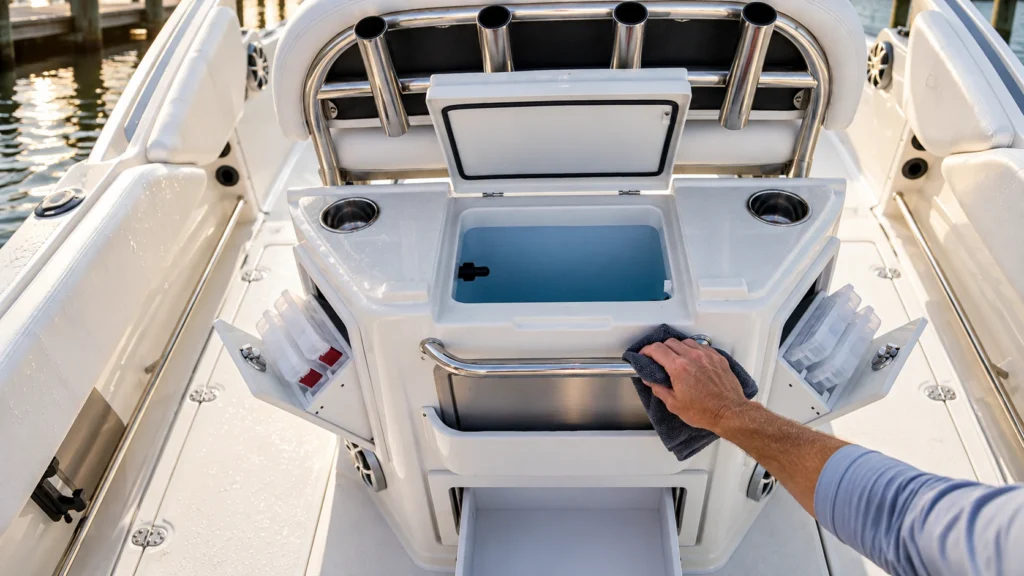
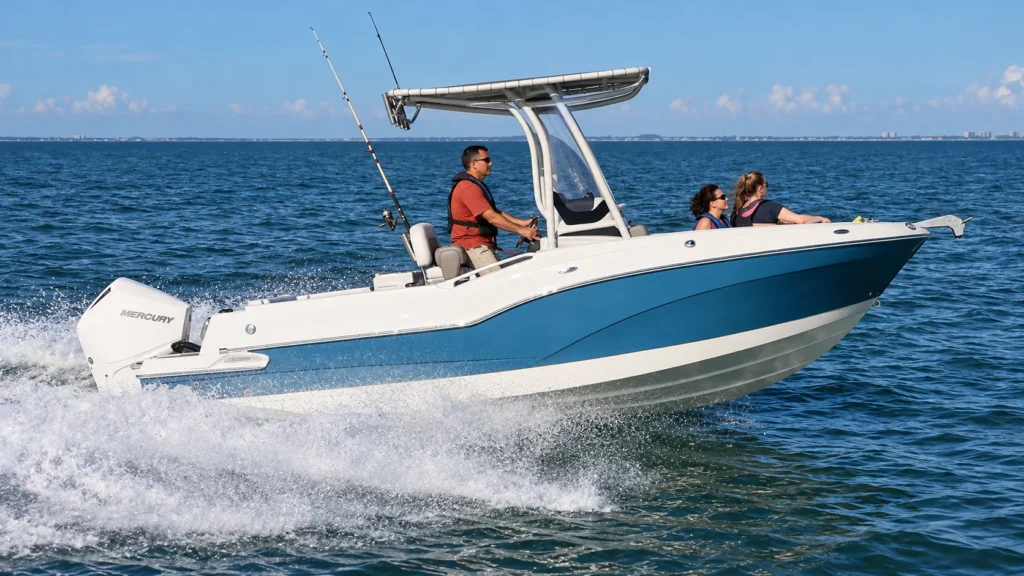
Make a day of a manageable stretch rather than trying to cover the bay. Leave time to idle into a harbor, find a dockside lunch where transient slips are available, or stop the conversation and watch the shoreline. A Navion dual console makes sense for this kind of mixed day: fishing on the agenda, with room in the plan for everyone else.
The practical detail is the one you check before leaving. Confirm marina hours and dock availability, then consider how the wind will affect the return leg. A quiet morning does not promise a quiet afternoon.
02 / Door County · Wisconsin
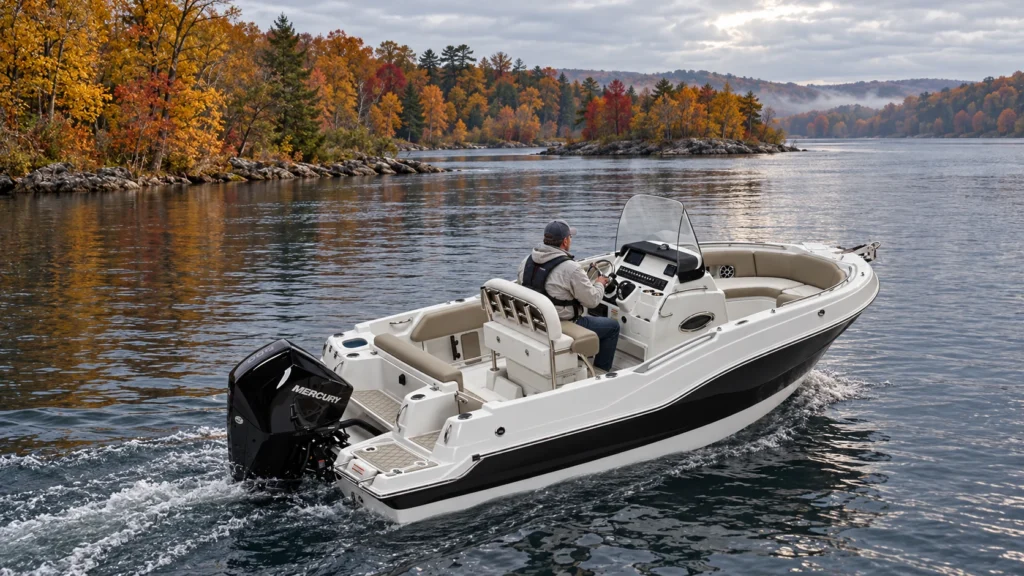
In Door County, the shoreline makes a strong case for looking up from the helm. Along the Green Bay side of the peninsula, the wooded shores around Fish Creek and Ephraim bring the autumn color close to the water. On a clear day, the contrast is simple: bright leaves, pale stone, and the dark reach of the bay.
Think of this as a trip built around the right weather window. Pick a nearby stretch that matches the conditions instead of committing to a long crossing. You can spend an entire afternoon noticing how the same bluff changes as the sun moves across it.
Great Lakes water demands respect even when the view looks inviting. Cold water, wind, and shorter daylight hours belong in the plan from the start. Check seasonal ramp and marina access before trailering north.
03 / Chickamauga Lake · Tennessee
North of Chattanooga, Chickamauga Lake trades the coast for the Tennessee River’s broad bends and wooded coves. Fall gives the shoreline a new edge, with patches of color reaching down toward the water. In the early light, you might find yourself drifting longer than you intended, listening to the small sounds around the boat.
This is a place to bring the fishing gear and leave some room in the schedule. Work a familiar area, take a break with the crew, and let the afternoon decide how far you go. A center console keeps the focus on time spent fishing, while the view gives everyone aboard a reason to stay out a little longer.
Look at current lake levels, generation information, and local access notices before you launch. This is working river water, with conditions that can change beyond what you see from the ramp. Plan the day around the water you have.
Fall changes the rhythm of boating, and that is a reason to stay with it.
04 / Lake Havasu · Arizona & California
At Lake Havasu, autumn is written in the light rather than the leaves. Desert slopes rise beyond the Colorado River reservoir, and late afternoon brings a warmer color to the rock. The view can feel spare at first, until you notice how much the shadows change it.
Build your outing around that shift. Make time for a shoreline cruise, a pause in an appropriate anchorage, and a return that leaves daylight to spare. There is something satisfying about easing back toward the dock while the mountains are still holding the sun.
Fall does not remove the desert from the equation. Bring water and sun protection, check wind forecasts, and confirm current ramp conditions. For fishing, check the rules that apply to these shared Arizona and California waters before you rig up.
05 / San Juan Islands · Washington
The San Juans give fall a quieter color palette. Evergreen shorelines meet gray-blue water, and a break in the cloud can turn a small patch of the sound silver. Around places such as Friday Harbor and Orcas Island, the appeal is often in the details: a wooded point, a changing tide line, the sound of water against a rocky shore.
Choose your outing with local knowledge and a close reading of the marine forecast. Currents, visibility, and exposed passages matter more than the distance on a map. A modest day in suitable conditions can hold plenty, without turning an island visit into a schedule you have to chase.
Keep binoculars handy and give wildlife the space required by current local rules. You do not need to get close to make a sighting memorable. Sometimes the best part is watching from where you already are.
06 / The Florida Keys · Florida
In the Florida Keys, fall can mean another chapter of warm-water boating. Around Marathon, the contrast between shallow turquoise water and deeper channels changes the view as you move. Mangrove edges, long bridges, and open stretches of sky give the day a different feel from anywhere farther north.
Put the fishing gear aboard, then choose your water to suit the conditions and your experience. A short, well-planned outing can leave plenty of time for a few casts and an easy meal ashore. There is no need to make the day bigger than it wants to be.
Fall overlaps Atlantic hurricane season, so watch tropical forecasts as well as the local marine outlook. Use current charts, respect shallow habitats and protected areas, and confirm fishing regulations for your plans. Let the forecast set the boundaries.
Before any of these trips, check current conditions, local rules, and seasonal access. Foliage, weather, and services vary from year to year, and a destination guide cannot choose your route for you. Leave someone ashore your plan and give yourself enough daylight to change it.
Then make the part that matters your own. A run beside a shoreline you have never seen in autumn, a cast you nearly saved for spring, or an extra minute at idle before you tie up. There is still a little light on the water.