The engine goes quiet, but the day stays with you. There is salt drying on the rail, a damp towel beside the tackle bag, and one last conversation about the fish that turned at the boat.
Give yourself a little time before you leave the dock. The care you put in now shapes how the next morning begins: what is ready, what needs attention, and what you can put out of your mind. A good after-trip routine earns its place by making the next trip simpler.
Keep the routine appropriate to your Navion, its engine, and the equipment aboard. The relevant owner’s manuals and your dealer’s guidance are the starting point. From there, a few steady habits can make care feel like a natural part of the day.
Put the boat in order before you put it away. Once it is safely secured, gather the loose items that came aboard with the crew. Remove food, waste, wet towels, and anything that will be unpleasant to rediscover later.
Bring tackle and personal equipment ashore for the care they need. Notice where things ended up during the trip, especially items that blocked access or were difficult to reach. That is useful information for how you pack next time.
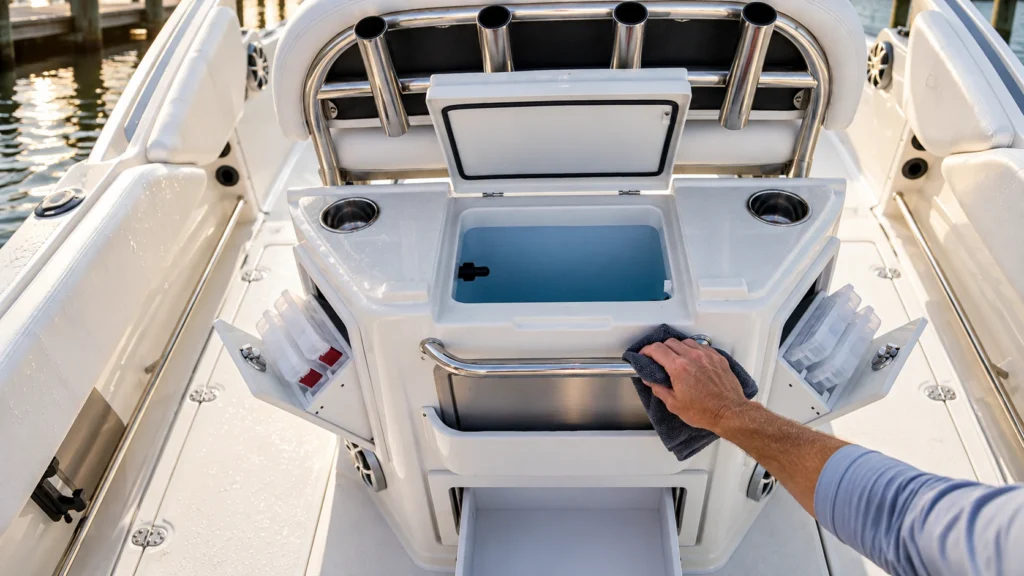
Take a moment with the compartments you used. Follow the manufacturer’s instructions for cleaning, drainage, drying, and ventilation. Keeping that work deliberate helps you spot something out of place while the details of the day are still fresh.
Give saltwater a proper goodbye. Where recommended for the surface or component, rinse with fresh water and use an appropriate cleaner. The aim is consistent care, with the right products for the materials aboard.
Work in a way that lets you see what you are cleaning. A rail, fitting, or edge can hide a mark you would miss in a quick spray from a distance. Avoid directing high-pressure water at seals, electronics, and electrical connections.
Upholstery, screens, metalwork, and finished surfaces each deserve their own instructions. Check those before trying a new product, brush, or treatment. If a stain or deposit needs more attention, get advice rather than reaching for something stronger by habit.
Follow the engine’s routine, exactly. Flushing, storage, and maintenance procedures vary by engine and installation. Use the instructions for your actual setup, including when the engine should be running and the conditions required for the procedure.
Give that part of the work your full attention. A method that suits another boat at the marina may not suit yours. If you are uncertain, ask your dealer or a qualified marine technician to walk you through it.
Keep service intervals somewhere you will see them. Engine hours, calendar dates, and the kind of use the boat gets can all matter to the prescribed schedule. Following the correct schedule is easier when it is recorded before memory has to do the work.
A good after-trip routine earns its place by making the next trip simpler.
Look for the small change. You do not need a problem to take a closer look. Routine care gives you repeated opportunities to notice a loose fitting, a damaged line, an unusual mark, or wear that was not there last time.
Think back to the run while you work. Was there a sound, vibration, warning, or handling change you meant to ask about? Write it down with the conditions and circumstances, and have anything concerning checked before using the boat again.
Clear notes help a technician understand what happened. They also keep an occasional issue from disappearing into a vague recollection of “something different last week.” Describe what you observed, without deciding you already know the cause.
Leave a useful record for your future self. A simple log can hold engine hours, maintenance dates, products used, and anything that needs follow-up. Keep service receipts and relevant documents where you can find them without searching through several places.
Use the same moment to look ahead. Replenish the things you used, set aside equipment that needs repair, and note anything you want to change about the next outing. A few minutes here can save an unsettled start at the ramp.
If the boat is being stored for longer or exposed to freezing conditions, follow the proper storage or winterization instructions. An ordinary rinse is not a substitute for that work. Arrange qualified help when needed and confirm what the boat, engine, and installed systems each require.
Your Navion Owners resources are a starting point for documentation and support. When you contact the team or your dealer, have the model, model year, and relevant identification details available. A clear question with the right details makes the conversation more useful.
Then take one last look before you leave. The gear is where it belongs, the work is noted, and the boat is ready for what comes next. Tomorrow’s first light is easier to meet that way.